
To put it in context
- The prescribed standard for the annual average of PM2.5 is 60 µg/m³ in India, and 15 µg/m³ in USA.
- Research shows that every 10 µg/m³ increase in PM2.5, increases all-cause mortality between 3-26%, chances of childhood asthma by 16%, chances of lung cancer by 36%, and heart attacks by 44%.
- Daily exposure to air pollution of 22 µg/m³ is equivalent to smoking 1 cigarette according to Berkeley Earth report.
How High Levels of PM2.5 Affect Us All
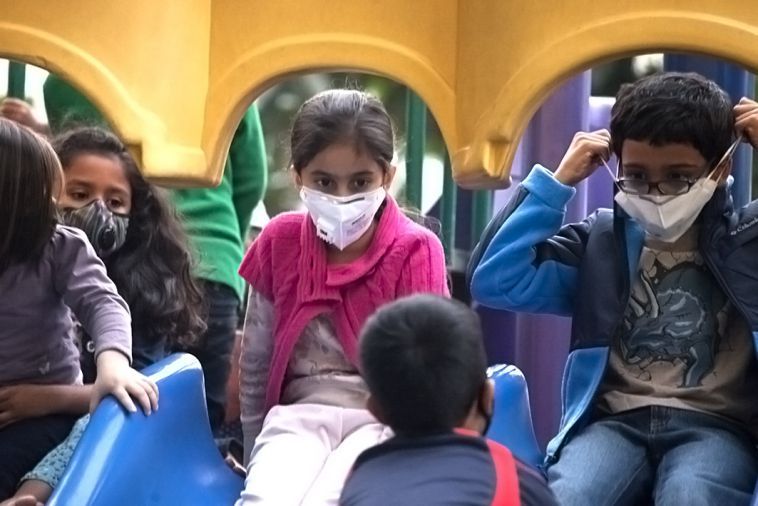
Our children – the most protected are the most prone
Our children are most affected by air pollution because, for their body size, they breathe more air and spend more time playing outside. Pollution can cause irreversible damage to their lungs which are still developing. Studies have shown that 40% of children in Delhi have reduced lung capacity. It also affects their brains and can lead to autism and lower IQ. In 2015, air pollution caused 6.5 million premature deaths globally, making it the leading cause of premature deaths.
Many feel that it is important for children to be exposed to air pollution to develop immunity against it. However, 24-hour exposure to PM2.5 levels above 220 µg/m³ is like smoking a full pack of cigarettes. Smoking more cigarettes, unfortunately, does not help you develop immunity to the ill-effects of smoking.
People with lung and heart disease
People with heart or lung disease such as coronary artery disease, congestive heart failure, and asthma or chronic obstructive pulmonary disease (COPD)— are at increased risk, because particulates can aggravate these diseases.
People with diabetes and stress-related disorders also may be at increased risk, because they are more likely to have underlying cardiovascular disease.
Exercising was never unhealthy until now.
Exercising is prescribed by doctors for healthy living. However in a polluted environment, exercise can do more harm than help. Exercise and physical activity cause people to breathe faster and more deeply— and to take more particles into their lungs. The most health-conscious people, who love working out in the wee hours of the morning, are at most risk due to high PM2.5 levels in the early mornings.
- Also read: How to Stay Active During Winters In Spite of Pollution
Older people are at high risk
Older adults are at increased risk, because they may have undiagnosed heart or lung disease or diabetes. Many studies show that when particle levels are high, older adults are more likely to be hospitalized and some may die of aggravated heart or lung disease.
But it really affects all of us.
The impact of air pollution may not always reflect immediately on an individual’s health, hence the gravity may not be easily understood. But the fact is that it affects a large proportion of the population, which makes this an important issue in global health.
A Lancet study (nations within a nation report) that estimated the disease burden and risk factors across all states of India from 333 disease conditions and injuries and 84 risk factors for each state of India from 1990 to 2016, ranked air pollution as the second leading risk factor for DALY (disability-adjusted life-years) after child and mother malnutrition. WHO reports that in 2015, around 9.2 million people died – one in six of total global deaths – as a result of air pollution exposure. India accounted for about 28 per cent of that figure with about 2.51 million deaths.
We need to wake up to the fact that air pollution is now the world’s largest single environmental health risk, for us and for our children. As a country, and as a species, we have to come together to reverse the current trends, before it is too late.
Find the Right Pollution Meter for Your NeedsAirAtom provides advanced air quality monitors and air quality sensors designed for accurate PM2.5, PM10, CO2, SO2, NO2, and TVOC measurement, ensuring real-time data for air quality monitoring and pollution control. With IoT-enabled connectivity such as Wi‑Fi, Ethernet, and GSM, our solutions support BMS automation, smart city, and smart building integration. AirAtom’s RESET-certified, ISO9001, and CE-marked devices meet government compliance standards, making them ideal for indoor and outdoor environments, including homes, schools, offices, industrial plants, and construction sites. Trusted for their high sensitivity, fast response, and long-term stability, our pollution meters help organizations maintain regulatory compliance and achieve healthier air.