
Air pollution is one of the biggest challenges faced by modern cities, affecting millions of people every day. To understand the quality of the air we breathe, three terms are often used — AQI, PM2.5, and PM10. While they are closely related, each represents a different aspect of air quality measurement. In this article, we’ll break down the differences, explain what these air pollution parameters mean, and how they affect your health.
What Is AQI?
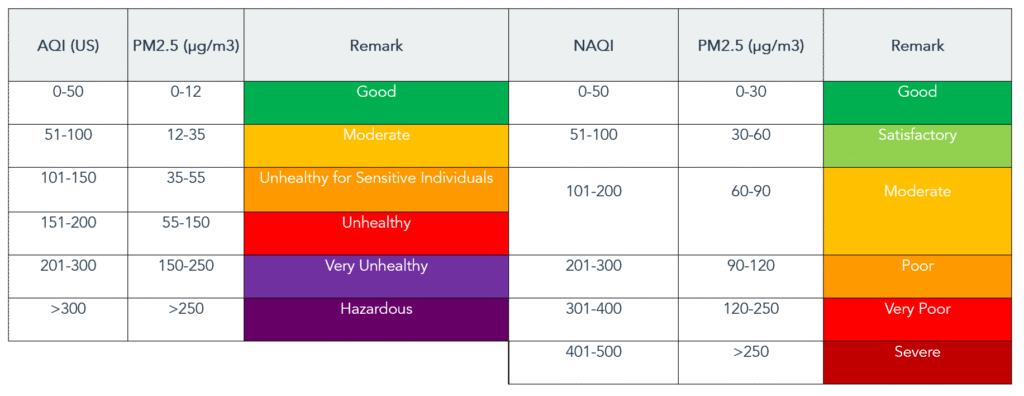
AQI (Air Quality Index) is a standardized scale used to communicate how clean or polluted the air is. It combines data from multiple air pollution parameters, including PM2.5, PM10, CO (Carbon Monoxide), NO₂ (Nitrogen Dioxide), SO₂ (Sulfur Dioxide), and O₃ (Ozone).
The AQI value ranges from 0 to 500, and higher values indicate higher levels of air pollution and greater health risks.
Here’s a general breakdown:
AQI Range Air Quality Possible Health Impact
0 – 50 Good Minimal or no risk
51 – 100 Moderate Acceptable but sensitive people may notice irritation
101 – 200 Unhealthy for Sensitive Groups Respiratory issues may appear
201 – 300 Unhealthy Everyone may experience health effects
301 – 400 Very Unhealthy Serious health effects for all
401 – 500 Hazardous Emergency conditions, avoid outdoor activity
The AQI simplifies complex air quality data into a single number, making it easy for the public to understand the level of pollution in their area.
What Is PM2.5?
PM2.5 stands for Particulate Matter smaller than 2.5 micrometers in diameter — about 30 times smaller than a strand of human hair. Because of their tiny size, these particles can penetrate deep into the lungs and even enter the bloodstream.
Sources of PM2.5:
Vehicle exhaust and industrial emissions
Burning of coal, oil, or wood
Construction and road dust
Smoke from stubble burning and household cooking
Health Impact:
Exposure to high levels of PM2.5 is linked to respiratory infections, asthma, lung cancer, and cardiovascular diseases. Long-term exposure can weaken the immune system and increase the risk of chronic illnesses.
Since PM2.5 particles are so fine, they are considered one of the most harmful air pollution parameters for human health. The World Health Organization (WHO) recommends keeping PM2.5 concentrations below 15 µg/m³ (24-hour average) for healthy living.
What Is PM10?
PM10 refers to Particulate Matter smaller than 10 micrometers in diameter. These particles include dust, pollen, and mold spores that are inhalable but larger than PM2.5.
Common Sources:
Road and construction dust
Agricultural activities
Industrial emissions
Vehicle movement on dry roads
PM10 Effect on Health:
The PM10 effect is generally less severe than PM2.5 because larger particles tend to get trapped in the nose and throat before reaching the lungs. However, prolonged exposure can still cause coughing, irritation, and respiratory issues — especially for people with asthma, children, and the elderly.
When PM10 levels rise, visibility reduces, and outdoor air may appear hazy. This is often noticeable during dry seasons or near construction zones.
How AQI Relates to PM2.5 and PM10
Both PM2.5 and PM10 are key contributors to the AQI calculation. In many urban environments, PM2.5 plays the dominant role in determining overall air quality levels, especially in densely populated cities where vehicle and industrial emissions are high.
Here’s how the relationship works:
The AQI combines multiple pollutants into one number.
PM2.5 and PM10 are measured in micrograms per cubic meter (µg/m³).
Based on their concentrations, specific AQI sub-indices are calculated.
The highest sub-index value among pollutants determines the overall AQI.
For instance, if the PM2.5 concentration is high while other pollutants are moderate, the AQI will primarily reflect the PM2.5 pollution level.
Why Monitoring AQI, PM2.5, and PM10 Is Important
Monitoring these air pollution parameters helps individuals and authorities take preventive action. Real-time air quality data can help you decide when to:
Avoid outdoor exercise during high AQI days
Use air purifiers indoors
Wear N95 masks in high-pollution areas
Support green and sustainable energy initiatives
Smart air quality sensors and particle counters can measure PM2.5 and PM10 levels accurately, allowing people to make informed decisions for better health and environment.
How to Reduce PM2.5 and PM10 Levels
Reducing particulate matter pollution requires both personal efforts and policy actions:
Limit vehicle usage and switch to public transport or electric vehicles
Avoid burning leaves, garbage, or crop residue
Use cleaner fuels and maintain household ventilation
Promote tree planting and dust control in construction sites
Community awareness and government regulations play a major role in improving AQI and controlling harmful emissions.
Final Thoughts
Understanding the difference between AQI, PM2.5, and PM10 helps you better interpret air quality reports and take necessary precautions.
AQI gives an overall picture of air pollution levels.
PM2.5 highlights the most dangerous fine particles.
PM10 represents larger dust and dirt particles that still pose health risks.
Each air pollution parameter provides valuable insight into the air we breathe. Regular monitoring and awareness can help build a cleaner, healthier future — one breath at a time.